
by DEV9
Share
The Day Your Dental Implants Started Predicting Future Health
The implant didn’t “fail” first. The calendar did. A 52-year-old executive in Newport Beach noticed a faint wobble around an implant that had felt rock-solid for three years—and assumed it was a bite issue or a loose crown. When he came into Vigoren Restorative Center, the imaging told a different story: early marginal bone changes that didn’t match the mechanical explanation he expected. That single finding triggered a broader review that surfaced health signals he hadn’t been tracking.
When an implant becomes an early indicator
An implant is a load-bearing interface between titanium and living bone. That bone is not static. When systemic inflammation rises or mineral metabolism shifts, bone remodeling changes everywhere—including around implants. This is why a perfectly placed implant can still show early crestal bone loss.
Most people treat loosening as a hardware problem. The real issue is biological tolerance. Miss that, and you chase parts instead of causes.
Clinically, the earliest “warning” often shows up as a pattern: subtle radiographic changes, bleeding on probing, or pocket depth changes that don’t align with how clean the site looks. That mismatch is the tell.
External evidence supports the scale of the issue. The 2017 World Workshop consensus on peri-implant diseases estimated peri-implantitis affects about 19% of patients and 22% of implants, with peri-implant mucositis even more prevalent (Berglundh et al., 2018).
Related Video
Video: Dental Implants Will Improve Your Health – Nebraska Oral & Facial Surgery by Nebraska Oral & Facial Surgery
The sequence that changes the timeline
Here’s how this plays out when the evaluation is done properly.
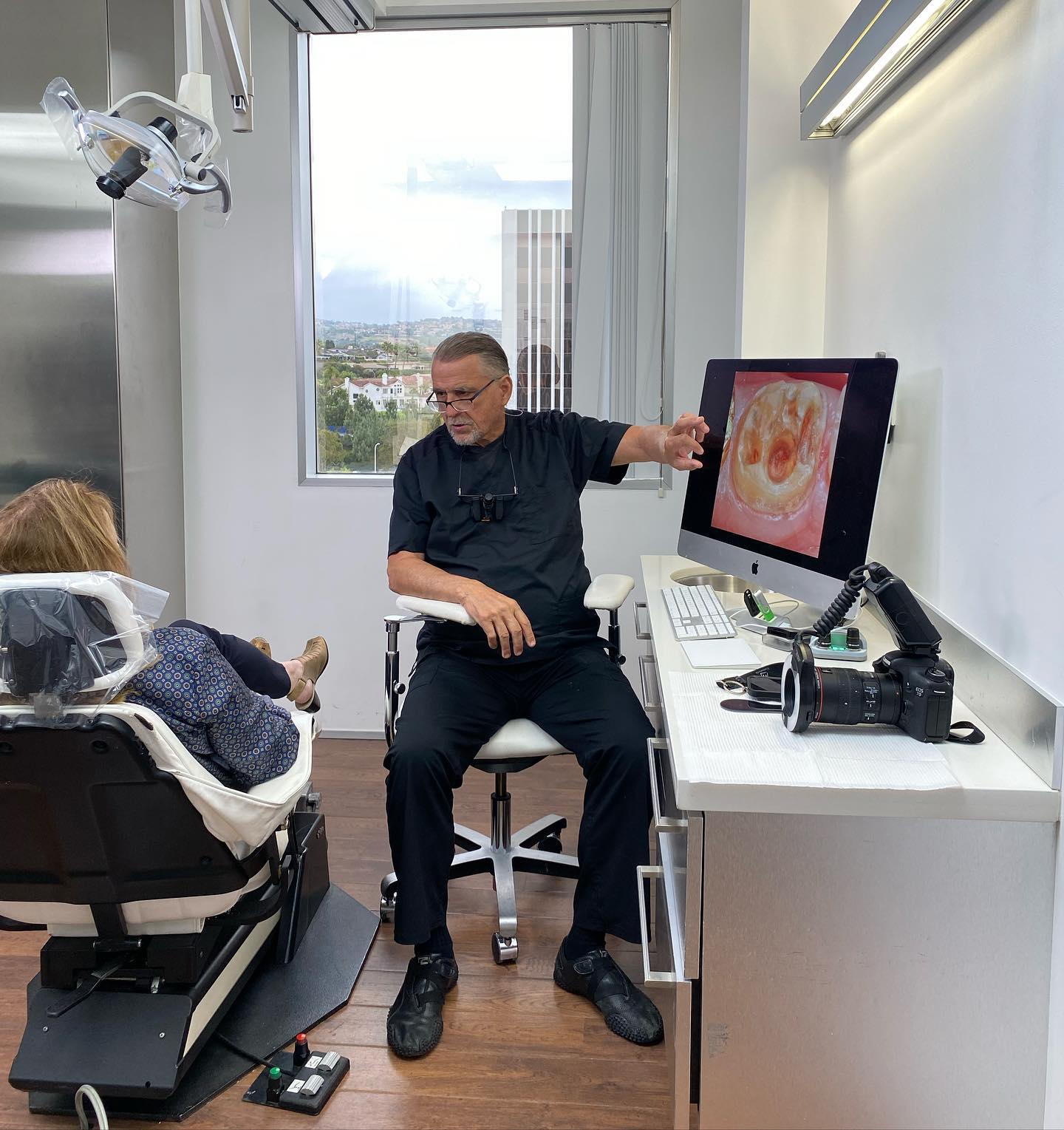
When the patient arrived, we didn’t start with “replace it.” We started with the sequence: confirm stability, compare current radiographs to baseline, evaluate tissue response, and then audit forces. When occlusal load is the driver, the story is consistent: wear facets, parafunction signs, and a force pattern that matches the bone loss.
When the story doesn’t match, you widen the lens. That’s exactly what happened. The bite looked manageable, but the bone response didn’t. A review of health history and a coordinated referral for metabolic screening uncovered early prediabetes—well before the patient expected it to show up as symptoms. The implant didn’t cause the condition. It revealed that healing and remodeling capacity had shifted.
This is where outcomes diverge. When you treat the site only, you get a short-term “fix.” When you treat the pattern, you protect the next five years.
What most restoration plans get wrong
The market keeps optimizing implants like they’re inert components—surface texture, torque values, and “one-size-fits-all” protocols. Mechanics matter, but they don’t explain why two patients with similar placement have opposite trajectories.
This isn’t an implant problem. It’s a vitality problem.
Most plans also ignore the quiet multiplier: force distribution across the entire arch. A single high contact on an adjacent tooth can change how an implant is loaded. If that tooth is structurally compromised, the patient compensates, the bite drifts, and the implant becomes the stress sink. That’s not a theory; it’s what shows up on the articulating paper and in the fracture patterns.
Counterintuitive truth: the “best-looking” restorations are frequently the worst predictors of long-term stability. A glossy crown that hides micro-mobility, a perfectly contoured implant crown that masks a parafunctional pattern—these are aesthetic wins that can still be biological losses.
When you miss the pattern, you don’t just lose an implant
When early bone changes are managed with local grafting or replacement—without a systemic and force audit—patients tend to re-enter the same cycle within 5–7 years: inflammation returns, bone loss progresses, and the next intervention becomes more invasive. The cost isn’t just financial. It’s calendar damage: more appointments, more recovery windows, more disruption to work and family life.
That’s the destabilizing part most teams don’t say out loud: repeating “local fixes” can actively train the mouth into a more fragile state. Each round changes the architecture—soft tissue, bone contours, occlusion—and reduces your margin for conservative options later. That’s not a feature. That’s the problem.
And while the patient is busy “handling the implant,” a competitor captures what should have been stable referrals: the patient stops recommending the practice, loses trust in long-term promises, and starts shopping for second opinions. Trust erosion is revenue leakage in slow motion.
What we do differently at Vigoren Restorative Center
At Vigoren Restorative Center, implant evaluation is never a single-tooth conversation. It’s a system conversation—bone response, tissue health, bite dynamics, and the restorations that distribute force.
When adjacent teeth need reinforcement, conservative coverage matters. A Bonded Onlay or Dental Onlay can splint cusps and seal interfaces while preserving more natural tooth structure than a full-coverage option. That preservation supports long-term vitality because you’re not removing structure you can’t replace.
When a tooth has had Root Canal Treatment, we typically shift the force-management strategy. A Ceramic Crown or Zirconia Crown distributes load and reduces crack propagation risk in a way a patchwork repair doesn’t.
And when bruxism is present—or suspected—we treat it like the structural threat it is. A Night Guard isn’t an accessory. It’s force insurance for both natural teeth and implant-supported restorations.
The clinical mechanism: why implants “talk” before the rest of the body does
Implant sites are high-demand environments. They’re constantly subjected to micro-loading, bacterial challenge, and immune surveillance. When systemic inflammation increases, the local response becomes less forgiving. When glucose regulation shifts, healing dynamics shift. When bone density trends downward, remodeling capacity changes.
That’s why serial comparison matters. A single X-ray is a snapshot. A sequence shows direction. Direction is what predicts outcomes.
For patients who want evidence-based solutions, this is the practical takeaway: the earlier you catch a remodeling trend, the more conservative your options remain—occlusal refinement, hygiene protocol changes, medical coordination, and targeted restorative adjustments instead of surgical escalation.
A brief case study: the “loose implant” that wasn’t just dental
The executive’s implant was not immediately removed. Instead, the plan focused on two parallel tracks: stabilize local conditions and validate systemic contributors.
- Local track: compare radiographs over time, confirm implant crown fit, evaluate occlusal contacts, and review home care technique.
- System track: coordinate with his primary care physician for metabolic screening and inflammation-related risk review, then align dental follow-up intervals to the biology we were seeing.
Outcome: the implant remained functional, and the patient had a concrete prompt to address a health trend earlier—before it showed up as a bigger medical event. That’s what “personalized care” looks like when it’s real: the mouth becomes a measurable part of optimizing vitality, not an isolated repair shop.
What to look for if you suspect your implant is signaling a bigger issue
If you’re seeing changes around an implant, these are the decision-relevant signals—not the marketing claims:
- Trend data: side-by-side radiographs over time, not just “looks fine today.”
- Force clarity: bite analysis that identifies where load concentrates (and why).
- Restoration strategy: conservative reinforcement (onlays) versus default full-coverage reduction when it’s not structurally necessary.
- Medical coordination: a plan for when dental findings suggest systemic screening.
When a provider can’t show you the trend, they’re guessing. That’s where most systems break.
FAQ
How can dental implants signal health changes before other symptoms appear?
Implant-bone interfaces remodel in response to inflammation, glucose regulation, and bone metabolism. When those variables shift, peri-implant tissue and crestal bone can change before you notice systemic symptoms. Serial radiographs, probing, and a force audit can reveal a trend early enough to coordinate screening with your physician.
Should I replace a “failing” implant immediately?
Not by default. Immediate replacement without identifying the driver (force, inflammation, hygiene access, systemic contributors) repeats the same outcome. A comprehensive diagnostic sequence determines whether the conservative next step is occlusal adjustment, tissue therapy, restorative redesign, medical coordination, or surgical intervention.
What restorative options support long-term stability around implants?
Force distribution and tooth preservation drive stability. Depending on remaining structure, a Bonded Onlay or Dental Onlay can reinforce adjacent teeth conservatively. When full coverage is structurally necessary—especially after Root Canal Treatment—Ceramic Crowns or Zirconia Crowns help distribute forces. A Night Guard protects both implants and natural teeth when bruxism is present.
Is this approach only for patients with multiple prior failures?
No. It’s most urgent when there’s a history of repeated repairs, but it’s most powerful before the first complication. Baseline imaging, bite analysis, and a clear monitoring plan set expectations and reduce the chance that a future change gets dismissed as “just one of those things.”
Expert perspective
Dr. Greg Vigoren puts it plainly: “An implant doesn’t live in isolation. When the biology changes, the bone tells the truth—sometimes before the patient feels anything.”
Next step: check whether your brand-new ‘implant problem’ is actually a health signal
If an implant feels different, looks different on X-rays, or keeps getting “patched” without a clear reason, assume the risk is bigger than the tooth. The decisive move is a diagnostic review that compares trends, audits force, and coordinates screening when the tissue response doesn’t match the mechanical story.
Book a comprehensive implant and restorative evaluation at Vigoren Restorative Center and find out—quickly—whether you’re dealing with a local complication or a pattern that will keep costing you time, trust, and stability.
Author
Further reading: Explore restorative dentistry in Newport Beach, learn about TMJ & Airway Care, or review options for Smile Makeovers when function and aesthetics both matter.
Sources: Peri-implant disease prevalence estimates referenced from the 2017 World Workshop consensus report (Berglundh et al., 2018, Journal of Clinical Periodontology). Additional clinical background on peri-implant conditions: American Dental Association — Dental Implants and Cleveland Clinic — Peri-implantitis.
Replacing a broken crown is easy. Making it last is harder. Greg Vigoren, DDS explains how comprehensive diagnosis—bite forces, joint/muscle function, and patient history—drives restorative plans designed for long-term stability.
Dental implants aren’t just cosmetic. They restore root-level mechanics, helping preserve jawbone and stabilize bite forces so adjacent teeth and restorations don’t pay the price.