
by DEV9
Share
Greg Vigoren, DDS: The Vision Behind Advanced Restorative Dentistry
The fastest way to “fix” a broken crown is to replace it. The fastest way to lose trust is to do that twice. Greg Vigoren, DDS built Vigoren Restorative Center around a simple premise: if you don’t diagnose the forces and biology that broke the tooth, the new work inherits the same failure.
Why standard restorative dentistry breaks down
Most restorative workflows are optimized for speed: identify the damaged tooth, remove decay or old material, build it back, and move on. That works for straightforward cases. It fails when the “broken tooth” is actually the pressure-release valve for a bigger problem—nighttime grinding, unstable bite contacts, inflamed joints, or airway-driven clenching patterns.
That isn’t bad luck. It’s predictable mechanics. High occlusal load and parafunction increase the risk of chipping, fracture, debonding, and post-op sensitivity—especially when the underlying bite scheme and muscle patterns stay unchanged. What many offices treat as an optional add-on (functional evaluation) is the part that prevents repeat work.
For context, the NIH’s PubMed Central includes reviews discussing how occlusal factors and parafunction relate to restoration performance and complications over time. See: Occlusal factors and restorative outcomes (NIH/PMC).
Related Video
Video: Revolutionizing Restorative Dentistry: Magnification, Imaging, and Precision in Newport Beach by Restorative dentistry in Newport Beach.
The brand vision: diagnose the system before you rebuild the teeth
At Vigoren Restorative Center, the “vision” isn’t a slogan—it’s a clinical sequence. Greg Vigoren, DDS starts complex restorative cases by mapping the conditions that determine whether dentistry lasts: how the teeth contact under function, how the joints load, how muscles recruit, and how medical history intersects with tissue and healing.
Skip this, and you’re guessing. A crown can be perfectly crafted and still fail early if it’s placed into a bite that concentrates force on one cusp, or into a patient whose parafunction is unmanaged.
This is where many restorative practices still get the order wrong: they plan the dentistry first, then “adjust the bite” after. Adjustments don’t fix an unstable system; they chase it.
If you want the practice’s overview of how comprehensive evaluation fits into restorative planning, start here: Vigoren Restorative Center: About & diagnostic philosophy.
What the diagnostic framework typically includes (and why it matters)
Comprehensive restorative diagnosis is layered because failures are layered. While every patient’s workup differs, advanced restorative planning commonly integrates:
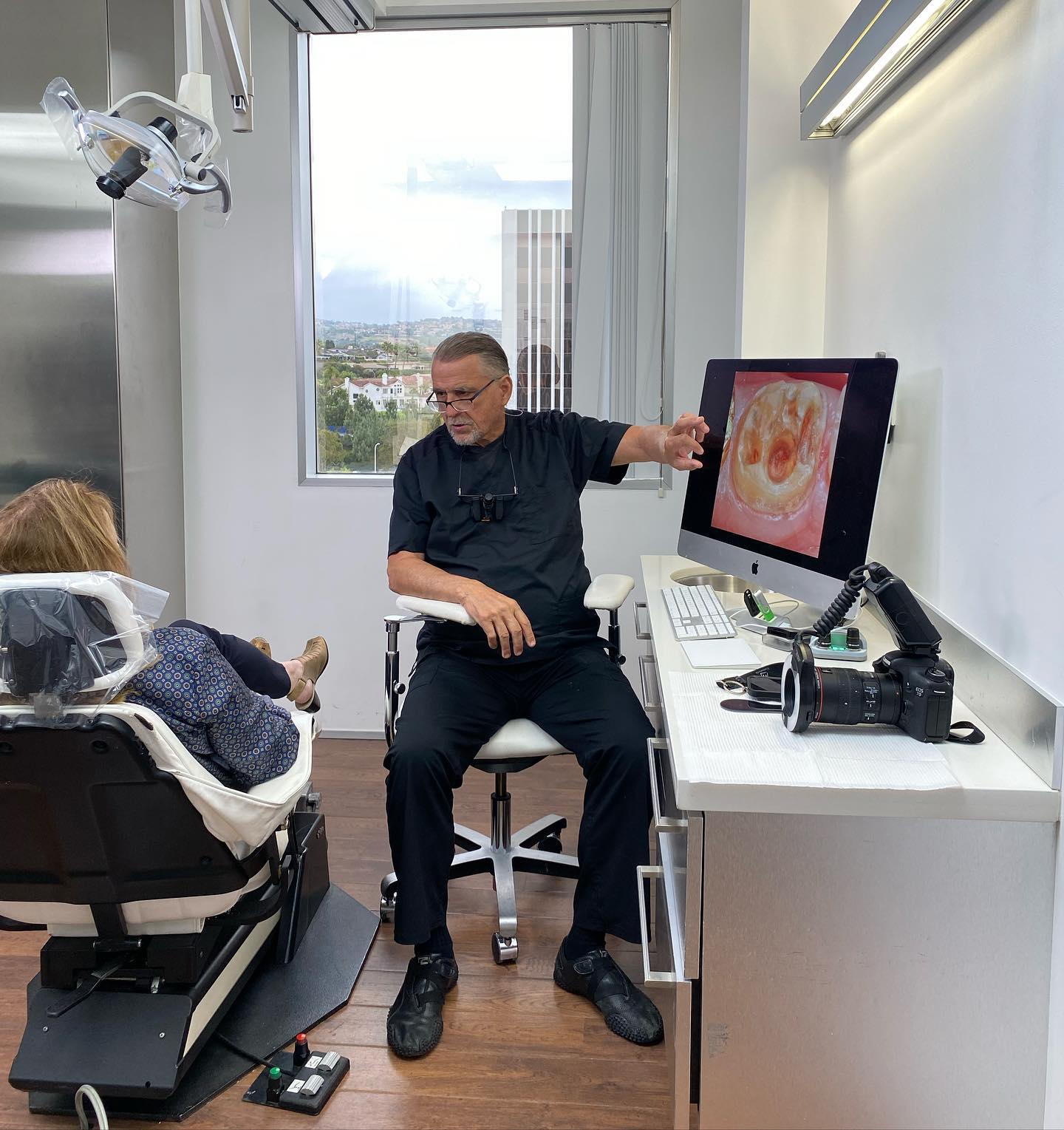
- Imaging and documentation to see existing restorations, bone levels, and structural risk.
- Functional bite analysis to identify where force concentrates and which contacts trigger deflection.
- TMJ and muscle assessment to understand joint loading and muscle-driven compensation patterns.
- Medical and airway screening to connect sleep quality, breathing patterns, inflammation, and healing capacity with dental breakdown risk.
This isn’t “more diagnostics.” It’s fewer surprises. When you identify force drivers early, treatment planning shifts from patching symptoms to engineering stability.
For baseline public-health context on how common adult restorative needs are (fillings, crowns, tooth loss risk), the CDC’s oral health resources are a useful reference point: CDC: Adult Oral Health.
How root-cause planning changes the actual treatment plan
When the diagnosis shows heavy parafunction, unstable occlusion, or a history of repeat failures, the plan changes in three concrete ways:
- Sequencing becomes strategic. Instead of “one crown at a time,” treatment is staged so new restorations don’t get placed into an unstable bite.
- Materials and design follow the force map. Restoration type, thickness, cusp design, and protective strategies are chosen based on load—not preference.
- Protection is planned, not suggested. When indicated, protective appliances and follow-up protocols are integrated into the plan so the investment is defended.
Miss this, and your dentistry becomes the sacrificial part. The mouth will keep expressing the same forces; it just expresses them through the newest work.
For a view of how restorative services are structured at the practice, see: Restorative dentistry at Vigoren Restorative Center.
A real-world case pattern: the repeat-crown loop (and how it gets interrupted)
One of the most common patterns in advanced restorative consults looks like this:
- Patient has a crown replaced once (fracture or debonding).
- Second crown “fails” again within a few years.
- Symptoms expand: cold sensitivity, bite pain, or jaw fatigue.
In this pattern, the tooth is rarely the only problem. The failure mechanism is usually a force problem (clenching/grinding, deflective contacts, unstable occlusal scheme), sometimes compounded by airway or sleep-related strain. The interruption comes from treating the driver first—mapping the bite and function, stabilizing the system, then rebuilding with a plan that matches how the patient actually loads their teeth.
Replacing the crown again is the easy part. Making it last is the work.
What most restorative practices still get wrong
Many offices interpret “restorative dentistry” as craftsmanship alone—better labs, better ceramics, better bonding. Quality matters, but it doesn’t override biology and physics.
What most approaches get wrong: they treat failure as a materials problem when it’s a force-management problem. That’s why patients hear, “Sometimes these things happen,” after the third fracture. They don’t “happen.” They repeat.
For broader professional context on dental research and evidence pathways, the ADA’s research resources are a credible starting point: American Dental Association: Science & Research Institute.
How to decide if this level of diagnosis is worth it
This approach is most useful when the cost of being wrong is high—financially, biologically, or both.
You’re a fit for comprehensive diagnostic planning if you have:
- Multiple failing restorations (repeat crowns, chips, debonds, fractures)
- Worn teeth, cracked teeth, or signs of grinding/clenching
- Jaw discomfort, morning tightness, headaches, or bite instability
- A history of “we adjusted it, but it still feels off”
You should look elsewhere (or keep it simple) if: you want a single cosmetic change with no history of functional problems, minimal wear, and no pattern of repeat failure. Deep diagnostics for a straightforward veneer case is usually unnecessary.
Choose wrong here, and you don’t just redo dentistry—you repeat the same failure.
Frequently Asked Questions
How does Greg Vigoren, DDS differ from other restorative dentistry providers?
The difference is sequence and priorities: comprehensive functional diagnosis (bite, joint/muscle patterns, and relevant health history) is treated as the starting point for complex restorative cases, not an optional add-on after crowns are already planned.
Does a “root-cause” approach always mean full-mouth reconstruction?
No. Root-cause diagnosis often prevents overtreatment. It clarifies whether the issue is truly isolated—or whether force patterns, wear, or bite instability will predictably break the next restoration.
Is extra diagnostic time worth it?
It’s worth it when there’s a pattern of repeat failure, significant wear, bite discomfort, or complex restorative needs. In those cases, diagnosis determines whether treatment holds. For a straightforward, low-risk single-tooth repair, a full workup is usually unnecessary.
Where can I learn more about the practice’s approach?
You can review the practice overview and philosophy on the About page, explore restorative dentistry services, and browse clinical insights on the blog.
Expert perspective
“When restorations fail repeatedly, the question isn’t ‘Which material is best?’ It’s ‘What force or function keeps breaking the work?’ If you don’t answer that first, you’re rebuilding on the same fault line.”
— Greg Vigoren, DDS, Vigoren Restorative Center
Explore next steps
To see how the practice frames diagnosis and long-term stability, visit Vigoren Restorative Center’s diagnostic approach. If you’re researching treatment options, review restorative dentistry services and read related clinical commentary on the Vigoren Restorative Center blog.
About the author
Greg Vigoren, DDS is the founder of Vigoren Restorative Center. His clinical focus centers on advanced restorative dentistry guided by comprehensive diagnosis—evaluating occlusion, joint and muscle function, and patient history to reduce repeat restorative failures and improve long-term stability.
—
A Newport Beach executive thought his implant was loosening from bite force. The imaging suggested a deeper pattern—one that can signal systemic stress before symptoms appear.
Dental implants aren’t just cosmetic. They restore root-level mechanics, helping preserve jawbone and stabilize bite forces so adjacent teeth and restorations don’t pay the price.